Barbara Grier
Born: November 4, 1933
Died: November 10, 2011
Time in Colorado Springs: 1943, 1948-1950
Barbara Grier was a landmark lesbian writer, publisher, and activist. She was the editor of the San Francisco lesbian magazine, The Ladder, and the co-founder of Naiad Press, one of the first ever lesbian publishing companies.
She also briefly lived in Colorado Springs during her teenage years.
A mistress of communication, whether by pen, typewriter, telephone or computer, Barbara led a life marked by three distinct phases, each of which remained grounded in her core mission: books.
The Queer Stranger in the Cabin
Barbara's family initially spent some time in Colorado around the time of her sister Penni's birth in 1943.
In 1943, eleven-year-old Barbara would go hiking in the hills around the town of Cascade. There, on a mesa above the town, was a cabin, and in that cabin lived a stranger who, through their quiet existence, informed Barbara's own understanding of queerness.[2]
"She was rough and crude, could easily have passed as a man and probably had at some point in her life. I was fascinated with her. I basically stalked her. She didn't make me leave. She let me pick flowers out of her yard. She wasn't friendly or welcoming, but she let me come near her."
The Greatest Gift
"Dorothy Grier's matter-of-fact acceptance of lesbianism, unusual in 1940's America, was one of the greatest gifts she could have given her daughter."
While the family was living in Colorado, Barbara's father, Philip Grier, abandoned Dorothy and his daughters to marry another woman and start a new family in Leadville. He was a philanderer, and had previously abandoned his first family, Iva Shneckenberger and their two sons, to be with Dorothy.
Philip did not provide for his sons from his first marriage, who had taken to shooting crows to put food on the table. When Dorothy learned this, she started slipping Iva money and food when she could.
When Philip left her, she found herself similarly struggling. She could not count on him to support their family financially, and economic opportunities were few for a single mother. By 1946, she became so overwhelmed that she placed Diane, 8, and Penni, 3, in a Catholic orphanage in Oklahoma City before moving to her hometown, Detroit. Barbara remained with her father and his new wife, but "made herself so intentionally disagreeable that he soon consented to let her join her mother."
It was in Detroit that the nearly 13-year-old Barbara confessed her feelings to a friend, Barbara Shier, and the two decided to research the subject at the Detroit Public Library.
Barbara marched up to the reference librarian with Shier in tow and requested books about homosexuals, a term she had discovered in her father's medical dictionary. Returning home after a day of research, Barbara matter-of-factly informed her mother: 'I am a homosexual.'
In response, Dorothy told Barbara that the word for a female homosexual was a "lesbian," which Barbara used to describe herself ever since. She also told Barbara about some historical figures who were also gay, and recommended two books: Radclyffe Hall's The Well of Loneliness and Marcia Davenport's Of Lena Geyer.
Needless to say, Dorothy was very affirming of Barbara's identity, a rarity for the time period. Dorothy even wrote a letter to The Ladder under the pseudonym Doris Lyles entitled "My Daughter is a Lesbian" which was published in the July 1958 issue of the magazine.
With the background of theatrical people during my childhood, I learned rather early that all of us, men or women, did not come within the realm of “norms.” Maybe this is why my daughter’s fate didn’t seem so terrible to me. I could think of a great many worse things, such as the unhappy twenty years of marriage I had shed at the time I learned of my daughter’s “difference”.
A Tumultuous Time at Colorado Springs High School
I was a superior being, and I immediately felt that lesbianism explained why I had always felt superior.
In 1948, Dorothy moved herself back to Colorado, specifically Colorado Springs. There, Barbara would enroll in Colorado Springs High School (now called Palmer High School) until 1950. While there, she clashed with the school counselors over her lesbian identity.
I had a counselor in Colorado Springs High School, whose name I can't remember. She became very upset, not by the fact that I was a lesbian, but because I refused to keep it a secret. And I did upset her, to some extent. She would talk with me, then become so unnerved that she would cry and wring her hands and say, "Whatever will we do with you?
In 1948, when Barbara was 15, she met a woman in her 20's at a bus stop. After speaking a few times, the woman learned that Barbara was a lesbian. She went home to tell her mother about Barbara.
The next day, Barbara was confronted by two Colorado Springs Police Department officers at school, who brought her to the police station and proceeded to question her.
Things like "What do you do with your girl friends?" in reference to genitals and so on, and even some things I hadn't heard of, and some suggestions that hadn't occurred to me, which l remember thinking about with curiosity.
The police threatened her before taking her back to school with instructions to never speak to the young woman who reported her again, and to not go to said woman's place of work, the Peak Theater.
Now I had no interest in this young woman, which is rather remarkable, because I was interested in so many young women, but I was really annoyed by the ban on the Peak Theater, because I enjoyed that theater a lot. I resented having to give up one out of the five available theaters in downtown Colorado Springs.
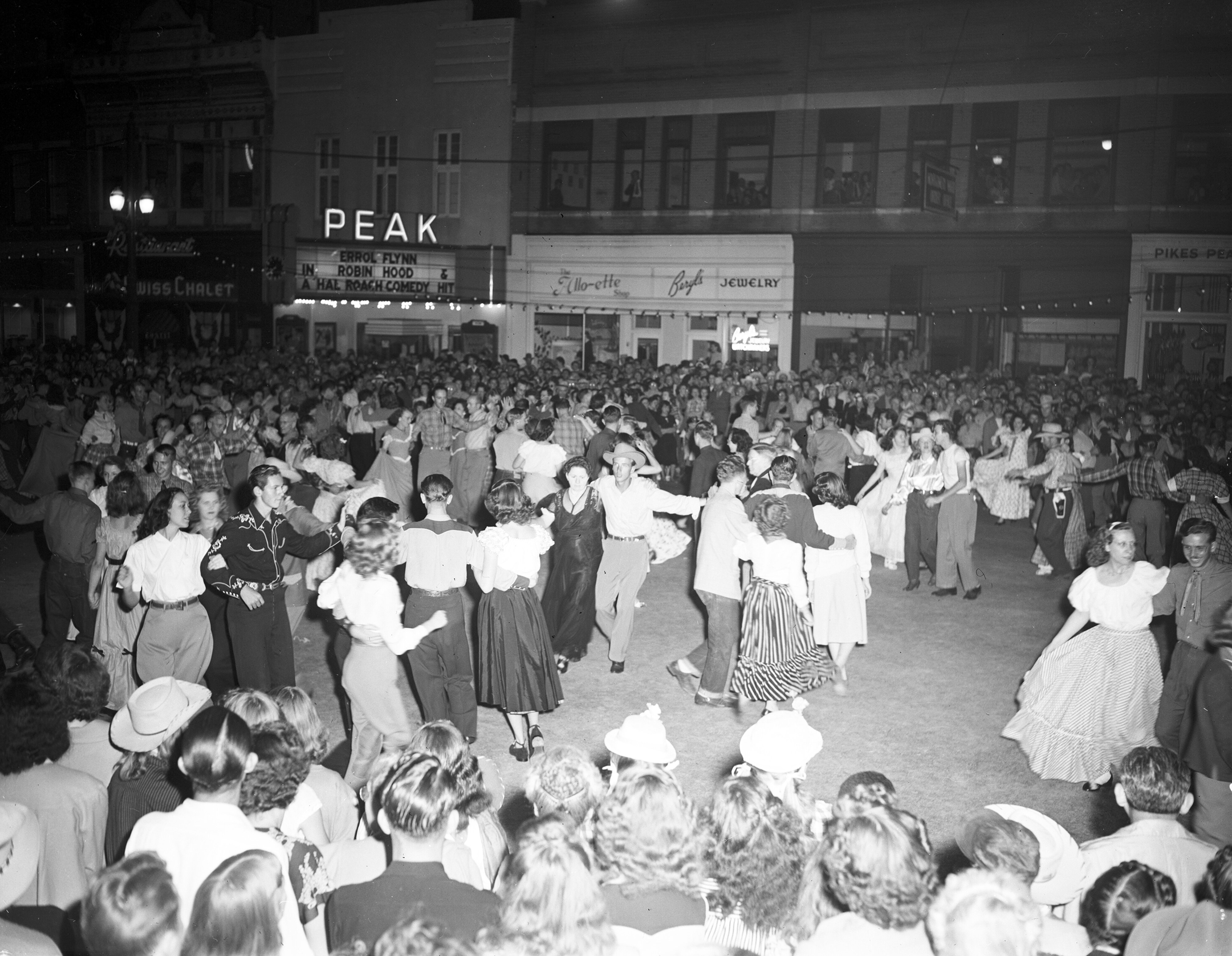
Despite this unpleasant encounter with the police and the backlash from her counselors, Barbara continued being out and proud as a lesbian, often using her identity as a way to shock others.
I can't think of anything comparable today that would have the same effect. I did sort of create temporary catatonic states in people occasionally. But I enjoyed that. I mean that was like a weapon in the hands of a teenager. I was no different from any other teenager-that is to say, obnoxious, overbearing, arrogant, positive that I knew everything about everything.
Barbara and her family moved to Kansas City, Kansas by 1951. She went on to be an editor for The Ladder, the same lesbian magazine her mother wrote to when she was younger. She later founded Naiad Press, a landmark publisher of lesbian literature. Her impact on lesbian culture and literature can't be overstated.
You can't change the world and everyone in it if you don't have power...and the people who control the press control the world.
Key Dates
- 1948: Barbara Grier and her family move to Colorado Springs. She starts attending Colorado Springs High School (now called Palmer High School). She is frequently at-odds with her counselors, who are distressed by her open lesbianism.
- 1948: Barbara Grier is taken from school and questioned by two Colorado Springs police officers about her lesbianism. She is told to stay away from the young woman who reported her, as well as her workplace, the Peak Theater.
- 1949: Barbara Grier steals her local library's only copy of The Well of Loneliness by Radclyffe Hall. This may have been Penrose. Still researching.
Questions
-
- I looked and didn't find Barbara. Might look again later.
-
- Awaiting response from SFPL about getting letter from Corinne Tee
-
- "One of the short stories she wrote later in life was set in the Colorado of her pre-teenage years and recounted how seventh-graders stoned an unpopular girl as she walked home from school. Whether the stones were real or fictional, Barbara’s lack of social skills had their origins in childhood." - from Indomitable, The Life of Barbara Grier
References
Passet, Joanne. INDOMITABLE: The Life of Barbara Grier. 1st ed., Bella Books, 2016. ↩︎
In Victoria Brownsworth's account of this, she refers to this person as follows: "Grier met her first transgendered person when she was eleven, a woman who lived in a cabin near..." This, combined with Grier's description, has me unsure whether this person was a trans man or not. So I am using they pronouns. ↩︎
Brownworth, Victoria. Before Stonewall: Activists for Gay and Lesbian Rights in Historical Context. Edited by Vern L. Bullough. Haworth Gay & Lesbian Studies. Harrington Park Press, 2002. ↩︎
Street Dance (1948-08-09). PPLD Digital Collections, accessed 09/03/2026, https://digitalcollections.ppld.org/nodes/view/76650 ↩︎
Cruickshank, Margaret, ed. The Lesbian Path : 37 Lesbian Writers Share Their Personal Experiences, Viewpoints, Traumas and Joys. Monterey, Calif. : Angel Press, 1980. http://archive.org/details/lesbianpath37les0000unse. ↩︎